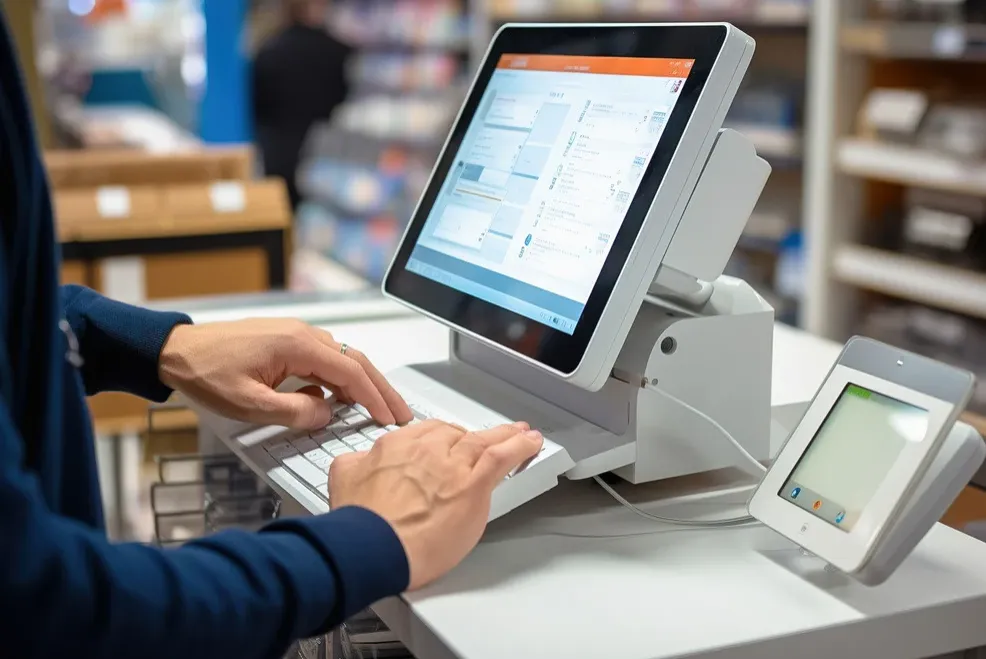
Running a retail store in San Antonio means managing inventory, staff, customer expectations, and daily transactions — often all at once. When the technology supporting those operations starts to fall behind, the effects don’t always show up as a single dramatic failure. More often, they appear as small, recurring friction points that accumulate over time: a slow checkout line, a missed reorder, a report that takes too long to generate. These are not minor inconveniences. They are signals that your current point-of-sale system is no longer adequate for the volume and complexity of your business.
The challenge is that many store owners adapt to these problems rather than address them. Staff work around system limitations. Manual processes fill the gaps. And over time, the cost of those workarounds — in time, lost sales, and operational errors — quietly grows. This article outlines ten specific signs that your current POS setup is overdue for a replacement, and why each one matters beyond the surface-level disruption it creates.
1. Your System Can No Longer Keep Up With Transaction Volume
When a POS system was installed years ago, it was sized for the business at that time. As transaction volume increases — whether from foot traffic growth, expanded product lines, or seasonal surges — older systems struggle to process operations at a pace that keeps lines moving. Slowdowns at the register are not just a customer experience problem. They represent a measurable loss of throughput during peak periods, and they place pressure on staff who are trying to maintain service quality under increasing operational load.
For retailers evaluating where to start, reviewing options built for current retail environments is a practical first step. Operators researching san antonio retail pos systems can find hardware and software combinations designed specifically for the transaction demands of regional retail businesses. Understanding what current systems offer helps frame how far behind an aging setup has fallen.
The Real Cost of Checkout Delays
Slow transaction processing compounds quickly during high-traffic hours. A checkout process that takes even a few extra seconds per customer creates a backlog that affects the experience of every person in the store. When those delays become predictable — happening at the same times each day or week — customers begin to adjust their behavior, which can mean choosing competitors or reducing purchase frequency. The problem is not just operational; it is a quiet erosion of customer retention that rarely shows up clearly in daily reports.
2. Inventory Tracking Is Inconsistent or Manual
A POS system that does not maintain accurate, real-time inventory counts forces store managers and owners into a reactive position. Restocking decisions get made based on visual checks or periodic manual counts rather than live data. This creates gaps: items sell out before a reorder is triggered, or overstock accumulates because purchasing decisions were based on incomplete information. Neither outcome supports healthy retail margins.
When Gut Instinct Replaces Data
When inventory data is unreliable, experienced retail staff often compensate by relying on memory or intuition. This is not a sustainable solution, and it creates organizational risk when those staff members are absent or leave. A store that depends on individual knowledge rather than system data has a structural weakness that grows more pronounced as product catalog size increases. Modern inventory management within a POS environment is designed to remove that dependency and replace it with consistent, system-generated records that any authorized team member can access.
3. Your System Does Not Integrate With Other Business Tools
Retailers today use a range of tools beyond the point of sale: accounting software, payroll systems, e-commerce platforms, and customer management tools. When a POS system cannot communicate with those tools, data must be transferred manually — a process that introduces errors and consumes staff time that could be directed elsewhere. The absence of integration is not just an inconvenience; it is a structural inefficiency that affects every part of the business that depends on accurate, current data.
Disconnected Systems and Reporting Blind Spots
When sales data, inventory counts, and financial records live in separate systems that do not communicate, reporting becomes difficult and unreliable. Business decisions that should be based on a clear operational picture get made instead on partial or delayed information. This is particularly problematic when trying to understand product performance, staff productivity, or the financial impact of promotional activity. Integrated systems eliminate those blind spots by maintaining a single, consistent data environment across business functions.
4. You Cannot Accept Modern Payment Methods
Payment technology has changed significantly over the past several years. Contactless payments, mobile wallets, and chip-based card transactions are now standard expectations among retail customers. A POS system that cannot process these payment types creates friction at the point of purchase and may push some customers toward competitors who offer a more straightforward checkout experience. Beyond customer preference, outdated payment processing hardware also carries security implications, particularly as payment card industry security standards continue to evolve and place compliance requirements on merchants.
Security Risk as a Business Risk
Older POS systems that were not designed with current payment security standards in mind may expose transaction data to vulnerabilities that newer systems address by default. For a retail business, a data incident involving customer payment information is not simply a technical problem — it has direct consequences for customer trust, potential legal exposure, and business continuity. Upgrading to a compliant, modern system removes a category of risk that no retail store should carry unnecessarily.
5. Reporting Is Limited, Slow, or Requires External Workarounds
A POS system should generate clear, actionable reports without significant manual effort. When owners or managers have to export raw data and manipulate it in spreadsheets to get meaningful insights, the system is not serving its intended function. Time spent on manual reporting is time not spent managing the floor, building supplier relationships, or developing staff — activities that directly affect business performance.
6. Your System Is No Longer Supported by Its Manufacturer
Software and hardware reach end-of-life stages at which the manufacturer stops issuing updates, security patches, or technical support. Running a POS system past that stage creates compounding risk. Any technical failure that occurs after manufacturer support ends may have no available resolution path. Updates that address known vulnerabilities will not be issued, leaving the system exposed. And as other components of the business technology environment evolve, an unsupported system becomes increasingly difficult to connect to anything current.
The Maintenance Trap
Businesses often continue using unsupported systems because the immediate cost of replacement feels significant. What that calculation typically misses is the cost of maintaining an aging system through workarounds, third-party repair, and lost functionality. Over time, the investment required to keep an old system operational often exceeds what a replacement would have cost. Recognizing this pattern early — before a critical failure forces an emergency decision — gives store owners far more control over the transition process and the outcome.
7. Staff Training Takes Longer Than It Should
A well-designed POS system should be straightforward enough that new staff can learn its core functions within a reasonable period. When onboarding a new employee requires days of hands-on instruction just to process basic transactions, that is a sign the system’s interface is poorly designed for its context. It also means that staff turnover — a consistent reality in retail — creates recurring operational gaps every time someone new joins the team.
8. You Have No Visibility Into Sales Performance by Product or Category
Understanding which products sell consistently, which are underperforming, and which generate the highest margin per square foot is fundamental to retail buying decisions. A POS system that cannot break down sales performance at a meaningful level of detail removes that visibility. Store owners working without that data make purchasing decisions based on incomplete information, which affects both cash flow and the customer experience created by the product mix on the floor.
9. Customer Management Is Handled Outside the POS
Many retail businesses track customer purchase history, manage loyalty programs, or maintain contact information using tools that are entirely separate from their POS system. When these functions are disconnected, the store loses the ability to connect transaction data with customer behavior in a way that informs decisions. Integrated customer management within a san antonio retail pos systems environment allows retailers to understand their customer base with far greater depth than disconnected tools allow.
10. Your Hardware Has Become Visibly Unreliable
Physical hardware — terminals, receipt printers, barcode scanners, cash drawers — has a functional lifespan. When components begin failing intermittently, the disruption to daily operations is immediate and visible. Staff develop workarounds. Transactions get delayed. And the unpredictability of when the next failure will occur creates a low-level operational stress that affects the entire team. Waiting for a complete hardware failure before acting is a reactive position that puts the business at the mercy of timing it cannot control.
The Downstream Effect of Unreliable Equipment
Hardware failures at the point of sale do not only affect the transaction in progress. They interrupt the flow of an entire checkout queue, require manager intervention, and sometimes result in lost sales if the issue cannot be resolved quickly. In a high-traffic retail environment, even a brief period of downtime during peak hours has a measurable impact on revenue. Proactive hardware replacement, as part of a broader system upgrade, eliminates that category of risk before it becomes an operational crisis.
Closing Thoughts: Recognizing the Pattern Before It Becomes a Problem
The signs described in this article rarely arrive all at once. More commonly, they appear one or two at a time, gradually, until the cumulative weight of the limitations becomes impossible to ignore. The difficulty is that each individual issue can feel manageable in isolation. A slow terminal here, a manual inventory count there — none of it seems urgent until the pattern is viewed as a whole.
What these signs share is a common underlying cause: a POS system that was built for a different stage of the business, and that has not kept pace with the demands placed on it today. For San Antonio retailers, the decision to upgrade is not simply about adopting newer technology. It is about putting operational foundations in place that support consistent performance, reduce the cost of manual workarounds, and give store owners reliable information to work with.
Retailers who recognize three or more of these signs in their current setup have enough information to begin evaluating alternatives seriously. The process does not need to be rushed, but it does need to start. Waiting for a critical failure to force the decision removes the ability to plan the transition on your own terms — and in retail, control over timing is always preferable to reacting under pressure.

I’m Leo Knox, the wordplay wizard behind WordsTwists.com where I turn everyday meanings into funny, clever, and creative twists. If you’re tired of saying things the boring way, I’ve got a better (and funnier) one for you!