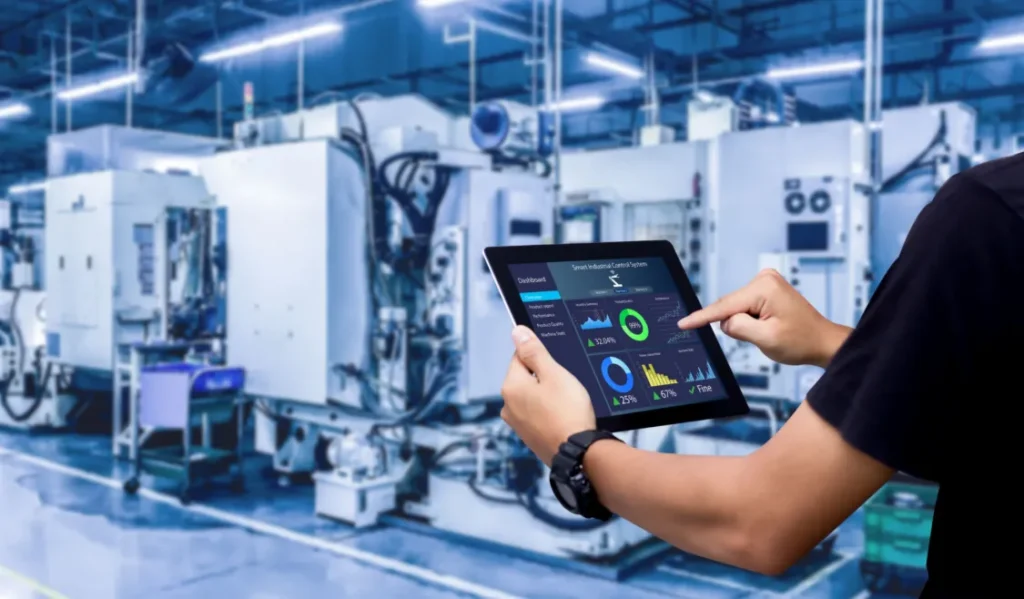
Modern manufacturing environments are defined by consistency requirements, tight production tolerances, and continuous throughput expectations. Whether operating in chemical processing, food production, pharmaceuticals, or heavy industry, facilities depend on precise coordination between sensors, actuators, and control systems.
Within this framework, industrial process controllers serve as the decision-making core of automated production lines. They regulate temperature, pressure, flow, and other process variables in real time. By maintaining stable operating conditions, these systems reduce variability and support predictable output.
Manufacturers evaluating automation infrastructure often explore solutions such as industrial process controllers to strengthen control reliability across critical operations.
Understanding how these systems improve efficiency requires examining their role in maintaining stability, reducing waste, and supporting data-driven decision-making.
Real-Time Process Stability
Manufacturing efficiency depends on maintaining consistent operating parameters. Even small deviations in temperature, pressure, or flow can affect product quality and yield.
Industrial process controllers monitor sensor inputs and adjust outputs automatically. This closed-loop control approach ensures that process variables remain within predefined ranges.
Stability improvements result in:
- Reduced product defects
- Lower material waste
- Improved repeatability across batches
Rather than relying on manual adjustments, automated control maintains steady performance even under fluctuating load conditions.
Reduction of Downtime Through Automated Response
Unplanned downtime disrupts production schedules and increases operational costs. Controllers detect deviations early and initiate corrective actions without waiting for manual intervention.
For example, if a temperature threshold begins to drift, the controller adjusts heating or cooling mechanisms immediately. This rapid response reduces the risk of process interruption.
Facilities that integrate industrial process controllers benefit from:
- Faster anomaly correction
- Reduced risk of system overload
- Improved equipment protection
Automated adjustments help prevent minor fluctuations from escalating into major shutdown events.
Improved Energy Efficiency
Energy consumption represents a significant cost factor in manufacturing. Heating, cooling, pumping, and ventilation systems operate continuously in many facilities.
Controllers optimize energy usage by ensuring that systems operate only within necessary parameters. Instead of running at maximum capacity continuously, equipment adjusts output based on real-time demand.
The U.S. Department of Energy identifies process optimization as a key driver of industrial energy efficiency. Controllers contribute directly by aligning energy input with operational needs.
Optimized energy management reduces cost without compromising performance.
Enhanced Data Visibility and Analytics
Modern industrial process controllers often integrate with broader manufacturing execution systems. They collect operational data that supports performance analysis and continuous improvement initiatives.
Data-driven insights help facilities:
- Identify recurring inefficiencies
- Monitor long-term trends
- Forecast maintenance requirements
When performance metrics are measurable, process improvements become targeted rather than speculative.
Efficiency gains are strengthened when decision-making is supported by real-time operational data.
Consistency Across Production Lines
Large facilities frequently operate multiple production lines that must maintain identical quality standards. Controllers standardize operating parameters across these lines, ensuring uniformity.
Standardization supports:
- Consistent product quality
- Simplified training requirements
- Easier compliance documentation
Industrial process controllers reduce variability that might otherwise arise from manual adjustment differences between operators.
Uniform control systems reinforce predictable output across shifts and production cycles.
Support for Regulatory Compliance
Many manufacturing sectors operate under strict regulatory frameworks. Temperature control, pressure regulation, and sanitation parameters must remain within documented limits.
Controllers provide automated logs of operational conditions, supporting compliance verification and audit readiness.
Maintaining accurate records through automated control systems reduces administrative burden while strengthening regulatory alignment.
Scalability and Future Integration
Manufacturing systems continue to evolve toward greater connectivity and automation. Controllers that integrate with networked monitoring systems support scalable growth.
Facilities investing in industrial process controllers position themselves to:
- Expand production capacity
- Integrate advanced analytics platforms
- Adopt predictive maintenance technologies
Scalability ensures that automation investments remain viable as production demands increase.
Conclusion
Industrial process controllers improve operational efficiency by stabilizing production parameters, reducing downtime, optimizing energy use, and providing actionable data. In modern manufacturing environments where reliability and precision determine competitiveness, automated control systems play a foundational role.
Manufacturers exploring automation infrastructure can evaluate solutions such as industrial process controllers to strengthen process consistency and operational resilience.
Efficiency in manufacturing is rarely achieved through isolated improvements. It emerges from integrated systems that maintain balance across variables. Industrial process controllers provide the structure that allows facilities to operate predictably, safely, and cost-effectively in increasingly complex production environments.

I’m Leo Knox, the wordplay wizard behind WordsTwists.com where I turn everyday meanings into funny, clever, and creative twists. If you’re tired of saying things the boring way, I’ve got a better (and funnier) one for you!