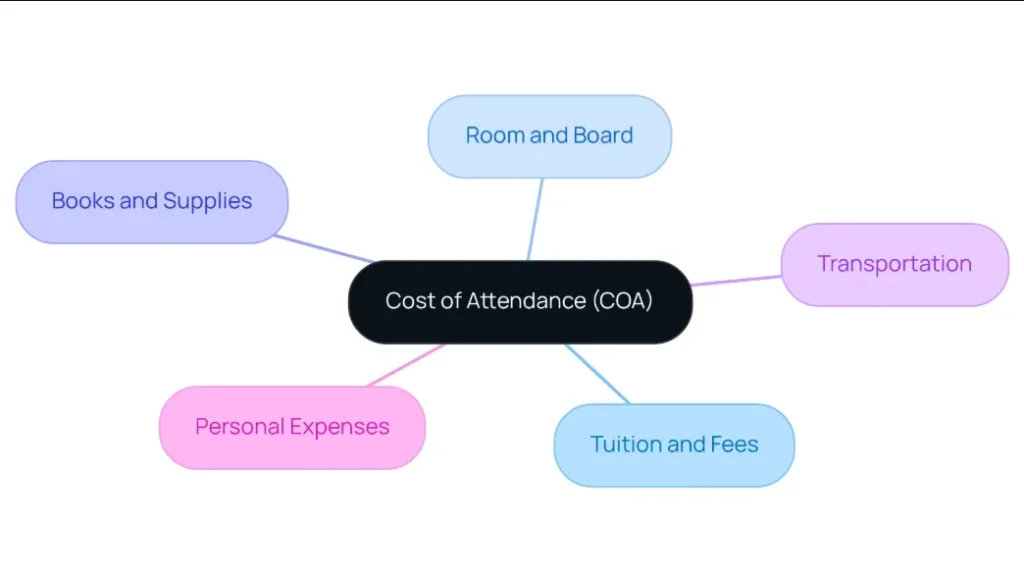
Many students look at tuition and assume they understand what college costs. That is a very normal starting point, but it is not the whole story. Tuition is only one part of a much bigger number called cost of attendance, often shortened to COA. If you do not understand that number, it becomes much harder to budget well or compare schools fairly.
That matters whether you are choosing between programs, estimating how much aid you may need, or trying to map out how online community college works at a school like Campus.edu. Time and cost are connected. The longer a path takes, the more housing, transportation, books, and living expenses may matter right alongside tuition.
Understanding cost of attendance is really about seeing college as a full life expense, not just an invoice from a school. Once you make that shift, financial planning gets more realistic.
Cost of Attendance Means the Whole Estimated Year
Cost of attendance is the school’s estimate of what it may cost a student to attend for one academic year. That estimate typically includes tuition and fees, but it also includes books, supplies, food, housing, transportation, and personal expenses.
Federal Student Aid’s explanation of cost of attendance is important because it makes clear that COA is meant to reflect the full educational cost, not just the bill you pay directly to the college. That distinction matters a lot.
A school with lower tuition is not always cheaper overall if other expenses are much higher. At the same time, a school with higher tuition may still become manageable if living costs are lower or aid is stronger. COA helps you see the bigger picture.
Why COA Matters Beyond Budgeting
A lot of students think cost of attendance is only there to scare them. It is actually useful. Schools use it when calculating financial aid eligibility, and students can use it to build a more honest plan for what college may require.
That means COA helps answer questions like how much grant aid may be needed, how much borrowing might be considered, and what costs still need to be covered through income or savings. Without that full estimate, it is easy to underestimate what school will really demand month to month.
This is one reason financial planning goes wrong. Students prepare for tuition, then get surprised by everything around it.
Direct Costs and Indirect Costs Are Different
One helpful way to understand cost of attendance is to separate direct costs from indirect costs. Direct costs are usually billed by the school, such as tuition, fees, and sometimes housing or meal plans. Indirect costs are expenses connected to college but not always paid directly to the institution, such as transportation, off campus living, supplies, and personal needs.
Seeing this difference helps students budget more accurately. If you only plan for the direct bill, you may still find yourself financially stretched because the indirect costs keep showing up every week.
Federal Student Aid’s budgeting guide for students is especially helpful because it connects official college costs to practical monthly planning.
Online Students Still Have a Cost of Attendance
Some students assume cost of attendance matters less if they are learning online. It can be different, but it still matters. You may save on commuting or campus housing, but you still need internet access, technology, books, supplies, and enough stability in your daily life to study effectively.
You may also have opportunity costs. For example, you may reduce work hours during certain terms or need childcare while completing coursework. COA is not only about what the school charges. It is about what your educational life costs.
That is why online learning does not eliminate the need for budgeting. It just changes the categories you need to pay attention to.
COA Helps You Compare Schools More Fairly
Comparing colleges by tuition alone can be misleading. One school may look cheaper at first, but once you add housing, transportation, required materials, and likely aid, the picture may change. Cost of attendance gives you a stronger basis for comparison.
This becomes even more useful when financial aid offers arrive. A larger aid offer from a more expensive school may still leave you paying more overall than a smaller aid offer from a lower cost school. You need both numbers together to understand what is truly affordable.
That is why the smartest students compare total cost and remaining cost, not just one or the other.
A Good Budget Starts With an Honest Number
Understanding your cost of attendance does not mean you will like every number you see. But it gives you something better than comfort. It gives you clarity. And clarity helps you make stronger decisions about where to enroll, how many classes to take, what aid to accept, and what kind of pace makes sense financially.
That is the real value of understanding COA. It moves college from vague expense to concrete plan. Once you know the full estimate, you can start building a path that fits your budget, your goals, and your day to day reality much more wisely.

I’m Leo Knox, the wordplay wizard behind WordsTwists.com where I turn everyday meanings into funny, clever, and creative twists. If you’re tired of saying things the boring way, I’ve got a better (and funnier) one for you!