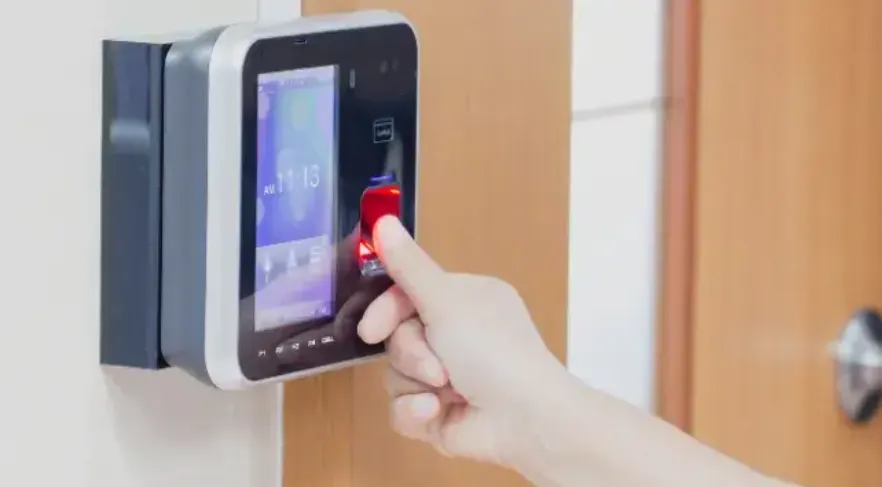
Commercial property management in a major metropolitan area carries a specific set of operational demands that don’t slow down. Tenant turnover, contractor access, after-hours entry, and multi-floor coordination are not abstract concerns — they happen every week, often every day. When access control systems work well, these realities are manageable. When they don’t, the consequences show up quickly in the form of security gaps, liability exposure, and operational friction that affects everyone in the building.
Dallas, in particular, presents a concentrated version of these challenges. The city’s commercial real estate sector continues to grow, and with that growth comes increased complexity in how buildings manage who enters, when, and under what conditions. Property managers, facilities directors, and building owners across the Dallas-Fort Worth area are increasingly evaluating not just whether they have an access control system in place, but whether that system is performing at the level their properties actually require.
The gap between adequate and well-managed access control is not always obvious from the outside. But the buildings that handle it best tend to share a few consistent characteristics — in how they approach system design, credential management, and integration with the rest of their operations.
What Sets High-Performing Access Control Apart in the Dallas Market
Most commercial buildings in Dallas have some form of access control. Key fobs, card readers, and PIN-entry systems have been standard for years. But having a system installed and having a system that functions reliably under real operating conditions are two different things. The best-performing properties treat building access control dallas tx not as a one-time installation decision but as an ongoing operational discipline.
This distinction matters because access control systems degrade over time without active management. Credentials accumulate for employees who have left. Permissions drift as job roles change. Hardware ages without maintenance schedules. In a busy commercial environment, these issues compound quietly until something goes wrong — a security incident, an audit finding, or a tenant complaint that reveals how disorganized the underlying system has become.
System Design That Reflects How the Building Actually Operates
One of the clearest differences between buildings that manage access well and those that don’t is whether the system was designed around the building’s actual use patterns. A medical office building with early-morning patient appointments has fundamentally different access requirements than a law firm that operates on a standard weekday schedule. A mixed-use property with retail on the ground floor and offices above needs layered access logic that separates public-facing spaces from restricted areas without creating friction for legitimate users.
When access control systems are configured generically — without reference to how the building is actually used — the result is often a system that works technically but creates problems operationally. Employees prop doors open to avoid credential issues. Property managers override restrictions to accommodate routine exceptions. These workarounds accumulate into real security vulnerabilities, not because anyone intended to compromise the system, but because the system was never built to match the building’s operational reality.
Well-managed properties invest time at the design stage in mapping access requirements by zone, time, and user type. That upfront work reduces the need for workarounds later and keeps the system functional as occupancy and use patterns evolve.
Credential Management as a Continuous Process
Access credentials — whether physical cards, mobile credentials, or biometric registrations — need to be actively managed throughout the life of a building’s tenancy. This is an area where many commercial properties fall short, not because they lack intention but because credential management rarely has a dedicated owner in the organizational structure.
The best properties treat credential lifecycle management as a formal process. When an employee leaves, their credentials are deactivated promptly. When contractors are granted temporary access, that access has a defined expiration. When a tenant’s space or access needs change, the system is updated to reflect that change rather than accumulating obsolete permissions.
According to the National Institute of Standards and Technology, identity and access management controls are among the most critical components of any physical security framework, and their effectiveness depends on consistent policy enforcement rather than technology alone. This is a practical reality that properties in Dallas with high tenant turnover or large contractor populations understand well — the technology can support the process, but it cannot replace it.
Integration Between Access Control and Building Operations
Access control systems don’t exist in isolation. In well-run commercial properties, they operate as part of a broader building management environment that includes video surveillance, visitor management, alarm systems, and in some cases building automation. The degree to which these systems share data and coordinate with each other has a direct effect on how quickly building staff can respond to security events and how efficiently they can manage daily operations.
Video and Access Working Together
Pairing access control events with video records is not a new idea, but many buildings still treat these as separate systems that happen to coexist rather than integrated tools that reinforce each other. When an access event — a door forced open, a credential used outside expected hours, a failed entry attempt — is automatically paired with the corresponding video timestamp, the building’s security team has immediate context without having to manually correlate records.
This integration reduces response time in genuine incidents and also simplifies the process of reviewing access logs during investigations or audits. For Dallas commercial properties that manage multiple floors or multiple tenant organizations, this kind of coordinated visibility is particularly valuable because it reduces the administrative burden of monitoring a complex environment manually.
Visitor Management as Part of the Access Ecosystem
Visitor access is often handled informally — a front desk sign-in, a phone call to the tenant, a handwritten log. But in buildings with security obligations to multiple tenants or with regulated occupants such as healthcare or financial services, informal visitor management creates real gaps. The best commercial properties in Dallas have formalized visitor workflows that are connected to the broader access control system.
This means visitors are registered in advance, issued temporary credentials that expire automatically, and tracked through the building in a way that creates an auditable record. It also means that tenants can manage their own visitor lists without requiring property management to intervene for every guest — a practical efficiency that also distributes accountability appropriately.
Maintenance and System Reliability Over Time
Access control hardware — readers, controllers, door hardware, and network infrastructure — requires regular maintenance to function reliably. This is a straightforward operational reality, but it’s one that gets deferred more often than it should. The consequence is not always a dramatic failure. More often, it’s gradual degradation: readers that intermittently fail to register credentials, doors that take multiple attempts to release, battery-powered components that behave unpredictably.
Planned Maintenance Versus Reactive Repair
Buildings that maintain their access control systems proactively experience fewer operational disruptions and avoid the compounding costs of reactive repairs. Planned maintenance schedules allow technicians to identify hardware that is approaching end of life before it fails, replace components in a controlled way, and update firmware without emergency pressure.
Reactive repair, by contrast, almost always happens at the worst possible time — during peak building hours, during a security incident, or in advance of an inspection. The cost in time, disruption, and credibility with tenants is typically higher than the cost of the maintenance that would have prevented it.
System Updates and Evolving Access Needs
Commercial properties evolve. Tenants change. Floors are reconfigured. Security requirements shift in response to incidents, insurance requirements, or tenant contracts. A building access control system that was correctly configured two years ago may no longer reflect current operational reality, and the best-managed properties have a regular review process to close that gap.
This doesn’t require constant reconfiguration. It requires a structured approach to reviewing access policies at defined intervals, confirming that the system’s configuration matches the building’s current use, and making adjustments before gaps become liabilities.
Why Decision-Making Around Access Control Matters More Than the Technology
The commercial properties that manage building access control dallas tx most effectively are not necessarily those with the most sophisticated technology. They are the ones that have made deliberate decisions about how access is governed, who is responsible for managing it, and how it fits into the broader operational structure of the building.
Technology choices matter, but they are secondary to operational clarity. A well-governed system built on reliable hardware and maintained through consistent processes will outperform a sophisticated system that no one is actively managing. The properties that understand this distinction tend to experience fewer security incidents, smoother day-to-day operations, and stronger tenant confidence in the building’s management.
For Dallas properties evaluating their current approach, the most useful question is not what system they have, but how well they are managing the one they have — and whether the processes around it are keeping pace with the demands of the building.
Closing Thoughts
Access control is one of those building systems that tends to get attention only when something goes wrong. The properties that handle it best are the ones that have shifted that dynamic — treating access management as an ongoing operational function rather than a solved problem.
In a market like Dallas, where commercial real estate continues to see sustained activity across office, mixed-use, and industrial sectors, the operational and liability stakes around access control are real. The buildings that are managing it well share a common thread: they have defined ownership, consistent processes, and a realistic understanding of what their systems can and cannot do without human oversight.
That combination — the right system, properly governed and actively maintained — is what separates properties that manage building access control dallas tx effectively from those that are simply managing risk they haven’t fully quantified yet. For facilities professionals and property managers evaluating where they stand, it’s a distinction worth examining carefully.

I’m Leo Knox, the wordplay wizard behind WordsTwists.com where I turn everyday meanings into funny, clever, and creative twists. If you’re tired of saying things the boring way, I’ve got a better (and funnier) one for you!