In modern industrial and commercial operations, efficiency and safety are paramount when it comes to moving, storing, and controlling materials. Businesses of all sizes, from manufacturing plants to large-scale distribution centers, rely on specialized systems to handle goods, components, and products throughout the production and logistics process. One of the most effective solutions for improving operational performance, reducing labor costs, and ensuring workplace safety is the strategic use of material handling equipment. These tools, machines, and systems are designed to streamline processes, minimize manual labor, and maintain the integrity of goods from the moment they arrive at a facility to the point of shipment or assembly. In this article, we provide an in-depth discussion of material handling equipment, exploring its types, benefits, applications, implementation strategies, and best practices for maximizing productivity and safety in diverse industrial and commercial environments.
Understanding Material Handling Equipment
Material handling equipment encompasses a wide range of mechanical devices, machines, and systems used to transport, store, lift, control, and protect materials throughout various stages of operations. Unlike manual labor, which can be time-consuming, physically taxing, and prone to errors or injuries, material handling equipment provides a reliable, efficient, and safe method for managing goods. It includes simple tools such as carts, trolleys, and hand trucks, as well as complex machinery like forklifts, conveyor systems, automated guided vehicles, pallet jacks, and cranes. The choice of equipment depends on the nature of the materials, operational requirements, and workflow design.
The implementation of material handling equipment is a critical component of modern industrial management. By reducing human effort and optimizing the movement of goods, businesses can enhance productivity, maintain consistent output, and prevent workplace accidents. Moreover, equipment selection and proper integration into existing processes are essential for maximizing return on investment, minimizing downtime, and improving overall operational efficiency.
Key Benefits of Material Handling Equipment
Investing in material handling equipment offers numerous advantages that directly impact efficiency, safety, and operational cost-effectiveness. One of the primary benefits is increased productivity. Automated or semi-automated systems, such as conveyor belts, palletizers, and forklifts, enable faster movement of materials compared to manual handling, ensuring that production schedules and shipping deadlines are consistently met. This increase in speed and efficiency translates to higher throughput and the ability to manage larger volumes of goods without expanding workforce size.
Safety is another major advantage. Manual handling of heavy, bulky, or awkwardly shaped materials is a leading cause of workplace injuries, particularly musculoskeletal disorders. Material handling equipment minimizes the need for repetitive lifting, pushing, and pulling, reducing the risk of accidents, injuries, and related costs such as medical care, compensation claims, and lost workdays. Additionally, many modern systems are equipped with safety features such as load sensors, emergency stop mechanisms, and ergonomic designs to further protect operators and workers.
Cost savings represent an equally important benefit. Although the initial investment in material handling equipment may be substantial, businesses often realize long-term savings through improved efficiency, reduced labor requirements, decreased damage to goods, and lower accident-related expenses. By optimizing workflows and minimizing operational bottlenecks, companies can achieve a higher return on investment while maintaining consistent quality standards.
Types of Material Handling Equipment
Material handling equipment can be broadly classified into several categories, each suited to specific operational needs. Manual handling equipment includes hand trucks, carts, dollies, and pallet jacks, which are ideal for light to moderate loads and small-scale operations. These tools provide flexibility and mobility while requiring minimal training or infrastructure, making them suitable for warehouses, retail facilities, and small manufacturing units.
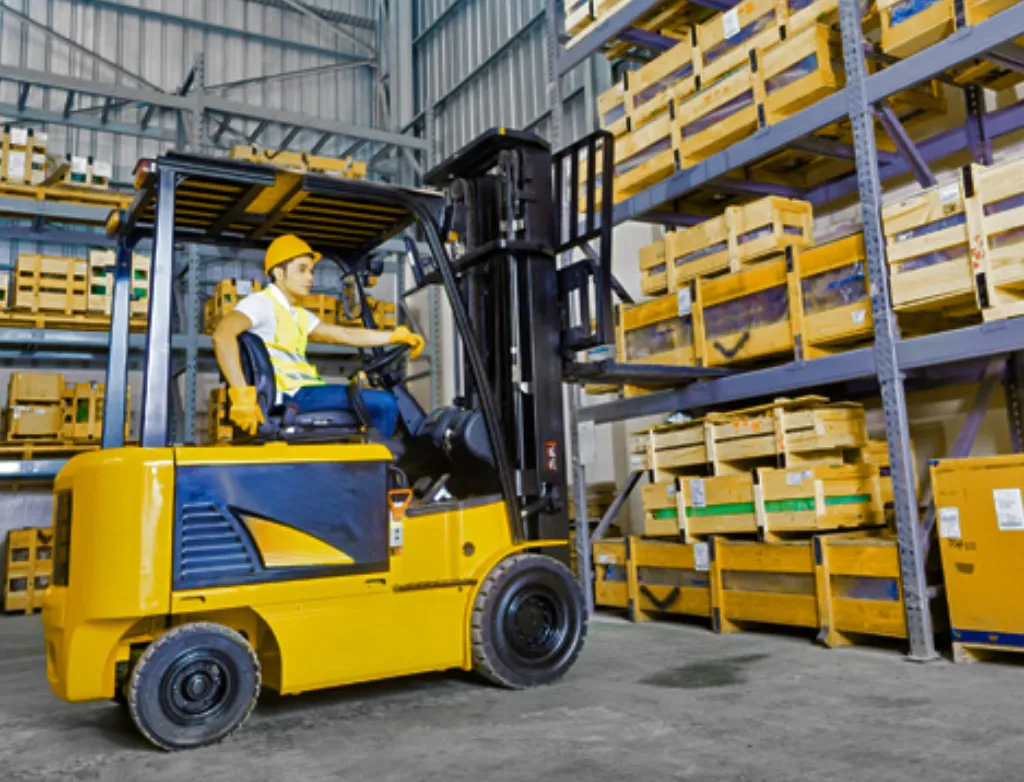
Powered industrial trucks, such as forklifts, pallet trucks, and order pickers, offer enhanced lifting capacities, greater mobility, and improved speed for handling heavier loads. These machines are widely used in warehouses, distribution centers, and manufacturing plants where efficiency and heavy load handling are critical. Forklifts, for example, allow operators to lift pallets to significant heights and transport them over long distances, significantly reducing labor requirements and increasing productivity.
Automated systems and conveyors represent a higher level of sophistication in material handling. Conveyor belts, automated storage and retrieval systems (AS/RS), and robotic pick-and-place machines are designed to move, sort, and store materials with minimal human intervention. These systems are particularly valuable in large-scale distribution centers, e-commerce fulfillment operations, and high-volume manufacturing facilities, where speed, accuracy, and reliability are essential.
Industrial cranes and hoists are used for lifting and positioning heavy, bulky, or awkward materials that cannot be safely moved by conventional trucks or manual methods. Overhead cranes, jib cranes, and gantry cranes are common in manufacturing, shipbuilding, and construction industries, providing the ability to move materials vertically and horizontally with precision and safety.
Applications of Material Handling Equipment
The applications of material handling equipment are extensive and span virtually every industrial and commercial sector. In manufacturing, these tools facilitate the movement of raw materials, components, and finished goods along production lines, ensuring smooth workflow and reducing bottlenecks. Assembly lines, stamping operations, and packaging processes all rely on equipment that allows operators to handle materials efficiently while maintaining quality control standards.
In warehousing and distribution centers, material handling equipment plays a crucial role in inventory management, order fulfillment, and shipping operations. Pallet jacks, forklifts, and conveyor systems streamline the storage and retrieval of products, while automated systems enhance accuracy, reduce labor costs, and speed up order processing. In high-volume operations such as e-commerce fulfillment, the integration of advanced material handling equipment is essential for meeting customer expectations for fast and accurate delivery.
Construction and industrial sites also benefit from material handling equipment, particularly when dealing with heavy materials like steel, concrete, or machinery. Cranes, hoists, and forklifts ensure that materials are transported safely, efficiently, and accurately, reducing labor strain and minimizing the risk of damage to both materials and workers. Temporary material handling setups, including portable lifts and carts, offer additional flexibility for projects with varying requirements.
Retail environments often employ material handling equipment for stock replenishment, storage organization, and point-of-sale inventory management. Efficient handling systems allow staff to quickly restock shelves, move large quantities of goods, and maintain a well-organized facility, enhancing both customer satisfaction and operational efficiency.
Considerations for Implementing Material Handling Equipment
Selecting and implementing the right material handling equipment requires careful planning and evaluation of operational needs. One of the first steps is assessing the type, size, and weight of materials that need to be handled, along with the frequency of movement. Understanding these requirements helps determine the appropriate equipment type, capacity, and level of automation necessary for the operation.
Workplace layout and workflow design are also critical factors. Equipment must be compatible with the facility’s space, aisle widths, ceiling heights, and floor conditions to ensure safe and efficient operation. For example, narrow aisles may require specialized forklifts or pallet jacks designed for tight spaces, while high-volume operations may benefit from conveyor systems or automated retrieval systems.
Operator training and safety protocols are essential for successful implementation. Even the most advanced material handling equipment can pose risks if operators are untrained or unaware of proper usage procedures. Training programs should cover equipment operation, safety features, load limits, and emergency procedures to minimize accidents and maximize efficiency. Regular maintenance and inspections are equally important, ensuring that equipment remains in optimal working condition and extending its lifespan.
Cost and return on investment must also be evaluated. While advanced automated systems may require significant initial investment, the long-term benefits in terms of increased productivity, reduced labor costs, and improved safety often outweigh the upfront expenditure. Conversely, for smaller operations or temporary projects, manual or semi-powered equipment may provide the best balance of efficiency, flexibility, and affordability.
Maximizing the Efficiency of Material Handling Equipment
To maximize the benefits of material handling equipment, businesses should adopt a strategic approach that includes workflow optimization, equipment selection, and ongoing monitoring of operational performance. Conducting a detailed workflow analysis helps identify bottlenecks, reduce unnecessary handling, and ensure that materials move smoothly from one stage to the next. Integrating equipment that matches the specific operational requirements minimizes wasted time, reduces labor strain, and improves overall efficiency.
Preventive maintenance programs are critical for sustaining performance and minimizing downtime. Regular inspection, lubrication, replacement of worn parts, and calibration of sensors or automated components ensure that equipment functions reliably and safely. Well-maintained equipment also reduces the risk of accidents, repair costs, and production interruptions.
Adopting a culture of continuous improvement further enhances operational efficiency. Monitoring key performance indicators such as throughput, cycle time, downtime, and incident reports allows businesses to identify areas for optimization and make informed decisions about equipment upgrades, workflow adjustments, or additional staff training. Combining these strategies with a strong emphasis on safety and ergonomics ensures that material handling operations remain productive, cost-effective, and sustainable.
Conclusion
The strategic selection, implementation, and optimization of material handling equipment are fundamental to modern industrial and commercial operations. By leveraging the right combination of manual tools, powered trucks, automated systems, and lifting devices, businesses can achieve significant improvements in productivity, safety, and operational efficiency. From manufacturing and warehousing to construction and retail, material handling equipment enables the seamless movement, storage, and control of materials, reducing labor strain, preventing accidents, and minimizing costs associated with manual handling or damaged goods.
Careful assessment of material requirements, workflow design, operator training, and maintenance programs ensures that equipment is used to its full potential, delivering maximum return on investment. By integrating material handling equipment into operational strategies, businesses can optimize processes, improve workplace safety, and maintain a competitive advantage in an increasingly complex and demanding industrial environment. In today’s fast-paced commercial landscape, material handling equipment is not merely a tool but a strategic asset that drives efficiency, productivity, and long-term operational success.

I’m Leo Knox, the wordplay wizard behind WordsTwists.com where I turn everyday meanings into funny, clever, and creative twists. If you’re tired of saying things the boring way, I’ve got a better (and funnier) one for you!