The Evolution of Financial Ecosystems in Online Gaming
The digital entertainment landscape has undergone a radical transformation over the last decade. While the visual fidelity of games, the complexity of mechanics like Megaways, and the immersion of live dealer streams often garner the most attention, the underlying infrastructure that supports these platforms is equally sophisticated. At the heart of this infrastructure lies a complex financial ecosystem designed to handle the movement of funds securely and rapidly.
For the modern user, the user experience (UX) is no longer defined solely by the entertainment value of the software. Instead, it is a holistic cycle that begins with account creation and ends with the successful retrieval of funds. In this context, the speed of transactions has become a primary metric of platform quality. Understanding how this process works requires looking beyond the “Cashier” button and examining the banking protocols, regulatory checks, and technological integrations that dictate the pace of modern iGaming.
The Anatomy of a Transaction
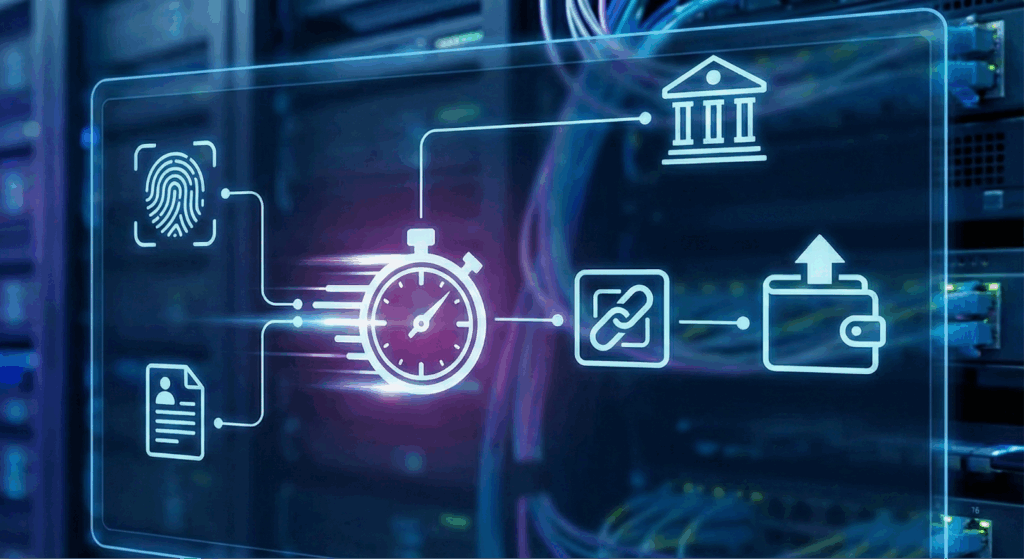
To the casual observer, a withdrawal request might seem like a simple digital handshake—a request sent and a payment received. However, in the regulated world of online gambling, this process involves a multi-layered series of verifications. This is where the concept of “friction” enters the conversation. Friction is introduced intentionally by operators and regulators to ensure security, but reducing this friction without compromising safety is the ultimate goal of fintech developers.
When a user initiates a payout, the request typically enters a “pending period.” Historically, this period could last anywhere from 24 to 72 hours. During this time, several background processes occur:
- Balance Verification: The system checks that the funds are legitimate and not tied to unfinished wagering requirements (a condition where bonus funds must be played through a certain number of times).
- Anti-Fraud Analysis: Algorithms analyze the player’s behavior for patterns indicative of collusion, chip dumping, or software manipulation.
- AML Protocols: Anti-Money Laundering checks ensure the source of funds is verified and that the withdrawal destination matches the deposit method—a practice known as the “closed-loop” system.
The difference between a standard operator and a high-efficiency platform lies in how these steps are handled. Advanced platforms utilize automated risk scoring. If a player’s account is fully verified and their behavior score is low-risk, automation can bypass manual review, resulting in instant processing.
The Role of KYC and Regulatory Compliance
One cannot discuss transaction speeds without addressing Know Your Customer (KYC) regulations. These are mandatory identity verification steps required by licensing bodies such as the UK Gambling Commission (UKGC) or the Malta Gaming Authority (MGA).
In the past, KYC was a reactive process: a player would request money, and the operator would then ask for documents (passport scans, utility bills), pausing the transaction for days. Modern operational standards have shifted toward proactive KYC. By encouraging verification upon registration or utilizing “soft checks” via public databases, operators can clear these hurdles before a withdrawal is ever requested.
This operational shift is crucial. When industry analysts evaluate the best fast withdrawal casinos, they are essentially looking for platforms that have optimized their compliance workflows. It is not merely about sending money quickly; it is about having a pre-validated infrastructure that allows the transaction to clear regulatory hurdles instantaneously. This seamless integration of compliance and convenience is what differentiates top-tier platforms from legacy operators.
Payment Gateways and Technology Stacks
The speed of a withdrawal is also heavily dictacted by the banking rail chosen by the user. Even if a casino processes a request instantly, the financial network used to transfer the funds has its own inherent latency.
E-Wallets and Digital Processors
Services like Skrill, Neteller, and PayPal have long been the gold standard for speed. Because these transactions occur within a digital ledger system rather than moving between physical bank clearing houses, they can be settled in seconds. The API connections between gaming platforms and these e-wallet providers allow for automated push payments the moment a withdrawal is approved.
Open Banking and Instant Bank Transfers
A more recent innovation is the adoption of Open Banking protocols (such as Trustly). Traditionally, bank transfers were the slowest method, taking 3–5 business days. Open Banking allows third-party providers to initiate payments directly from a user’s bank account with secure authentication. This bypasses the traditional clearing delays, effectively turning a bank transfer into an instant transaction. This technology has revolutionized the “Pay N Play” model popular in European markets, where registration and deposit happen simultaneously.
Cryptocurrencies and Blockchain
For markets operating under different regulatory frameworks, cryptocurrency has emerged as a solution to transaction friction. By utilizing blockchain technology, transactions are validated by network confirmations rather than a centralized banking authority. While the volatility of assets is a consideration for players, the underlying mechanic offers unparalleled speed. A withdrawal via Litecoin or Ripple, for example, can be fully confirmed and accessible in a private wallet within minutes, regardless of the time of day or banking holidays.
The Psychology of Trust and Cash Flow
From a behavioral psychology perspective, the speed of withdrawal is intrinsically linked to trust. In the digital age, consumers are accustomed to instant gratification—from streaming movies to same-day retail delivery. In the iGaming sector, a delay in payment creates anxiety.
When a platform holds funds for an extended period, it creates a “pain point” for the user. Historically, some operators utilized long pending periods in the hopes that a player would reverse the withdrawal and continue playing—a practice that is now frowned upon and increasingly restricted by responsible gambling regulators.
Today, the focus is on “financial RTP.” While Return to Player (RTP) usually refers to the theoretical payout percentage of a slot game over millions of spins, users also evaluate the “return time” of their capital. A high-volatility game experience, which implies high risk and potential variance, requires a stable and predictable banking experience to balance the user journey. If the gameplay is unpredictable, the banking mechanism must be the opposite: reliable, fast, and transparent.
The Future: AI and Algorithmic Clearing
Looking forward, the integration of Artificial Intelligence (AI) into payment processing is set to further reduce wait times. AI systems are currently being trained to predict withdrawal requests based on player behavior patterns, allowing operators to pre-allocate funds or pre-approve transactions before the user even navigates to the cashier page.
Furthermore, risk management AI can perform deep-dive security checks in milliseconds, a task that would take a human agent minutes or hours. This allows for higher limits on automated withdrawals, meaning that even significant sums can be processed without manual intervention, provided the security parameters are met.
Conclusion
The mechanism of moving money in the online gaming space is a sophisticated blend of regulatory adherence, banking technology, and behavioral psychology. It is no longer sufficient for a platform to simply offer a catalogue of games; the logistical backbone must be equally robust.
As technology progresses towards Open Banking and deeper blockchain integration, the gap between “virtual” winnings and “real” funds continues to narrow. For the end-user, this means a safer, more transparent environment where the focus remains on the entertainment experience rather than the logistics of finance.

I’m Leo Knox, the wordplay wizard behind WordsTwists.com where I turn everyday meanings into funny, clever, and creative twists. If you’re tired of saying things the boring way, I’ve got a better (and funnier) one for you!