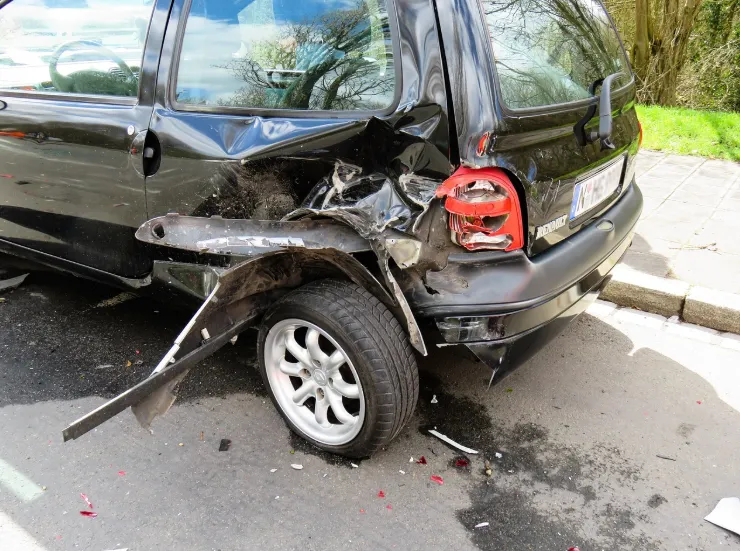
Your first thought leaving the scene of a fender-bender will likely be this:
I got hit but everything’s fine. Let’s not make a big deal out of this.
And that right there is precisely why so many people make costly mistakes after minor accidents.
Low impact accidents like parking lot bumps, slow-speed rear-ends, and bumper-to-bumper scraps happen thousands of times each day. In fact they’re so common most victims don’t even realize what they’re getting into afterward.
Don’t make that mistake.
Minor accident compensation is one of the most complex aspects of personal injury law. And unfortunately, it’s also one of the biggest areas where people hurt themselves out of ignorance.
Table of Contents
- What Counts as a Low-Impact Accident?
- Why Small Crashes Still Cause Serious Injuries
- How Insurance Companies Respond to Minor Accident Claims
- What Minor Accident Compensation Covers
- Legal Steps to Take After a Low-Impact Crash
What Counts as a Low-Impact Accident?
A low impact accident can be defined as any collision involving slow speed contact (usually under 10 to 15 mph). This includes fender-benders, parking lot incidents, slow-speed rear-end collisions, and even some intersection side scratches.
Minor accidents are rarely considered ‘accidents’ at all. Neither by the other driver, nor the insurance company. Some victims even fail to recognize the seriousness of their own accident.
But anyone familiar with low impact accident cases in Connecticut will know the truth. Minor car damage does not necessarily mean minor injuries. Far from it actually.
That false equivalency is exactly how insurance companies and at-fault drivers attempt to invalidate minor accident compensation claims. They’re not the same thing.
Why Small Crashes Still Cause Serious Injuries
Which brings us to the problem.
Most people assume that if the damage to the car was minimal, then the damage to their body must be too. But that’s not how physics works.
Car manufacturers design vehicles to withstand low-speed collisions with as little car damage as possible. That’s great for repair bills. Not so much for people.
When the car takes the brunt of the impact, the occupants take less of the energy from the crash. That means all that transferred energy is going straight into the body instead. The car might look fine. The driver will not feel fine.
Research shows rear impacts account for over 50% of all insurance claims made for whiplash injury. Injuries can occur at speeds as little as 5 mph, with a reported injury risk of 35-68% in low-speed rear-impact collisions.
Some of the most common minor accident injuries include:
- Whiplash — caused by the head snapping forward and back suddenly
- Soft tissue injuries — damage to neck, back, and shoulder muscles and ligaments
- Concussions — the brain being jarred within the skull
- Herniated discs — force pushing spinal discs out of position
- Exacerbated prior conditions — previous injuries made significantly worse by the collision
But here’s the kicker.
Injuries may not show up right away.
Traumatic injuries can easily be masked by adrenaline. It isn’t until several hours later that the body starts to ache all over. By then it can be too late to protect legal rights.
The moment a victim leaves the scene of an accident, the clock starts on the right to file a claim. Documentation and evidence won’t matter if that deadline is missed.
Consulting the state’s statute of limitations as soon as possible is critical. Because when it comes to insurance companies, time is literally money.
How Insurance Companies Respond to Minor Accident Claims
Here’s the reality of what insurance adjusters say about low impact crashes.
These accidents aren’t serious enough to merit compensation.
Trying to lowball victims into accepting less compensation is one of the biggest insurance company tactics in play. And for people who don’t understand their rights, it works.
Adjusters look at how much damage occurred to the car and use that to imply how injured the victim could possibly be. Minor car damage equals minor injury? That’s not how science works.
Research found injuries claimed in 21% of rear crashes caused less than $500 in vehicle damage. Major injury can occur in accidents that leave a car looking nearly perfect. That’s why proper documentation after a low impact accident is so important.
- Get police to file a report and remain at the scene until they do
- Gather as much information as possible from the other driver and any witnesses
- Take photos of any vehicle damage however slight
- Seek medical treatment as soon as possible and follow through with every recommendation
- Avoid speaking to insurance companies without first consulting an attorney
Building a paper trail as soon as the crash occurs can mean the difference between winning and losing a claim later.
What Minor Accident Compensation Covers
Low impact crashes can still cause catastrophic injuries.
One thing many accident victims don’t realize is that minor accident compensation can be used for more than fixing a car.
Major injuries from low impact accidents can carry life-altering healthcare costs. Making a complete recovery can mean:
- Doctor visits (urgent care and specialist appointments)
- Physical therapy and rehabilitation
- Lost wages when unable to work
- Pain and suffering damages
- Future medical care
- Repairing or replacing the vehicle
Vehicle damage does not determine the value of a claim. Actual injuries do.
Taking care of the body before worrying about the car is always the right call.
Legal Steps to Take After a Low-Impact Crash
There’s only one chance to protect legal rights after a minor accident. Here’s what needs to happen.
- Call the police. Make sure they file an official report.
- Gather information and take photos of both vehicles and the scene.
- Get checked out by a medical professional as soon as possible.
- Call the insurance company to file a claim.
- Speak to a personal injury attorney before talking to anyone else.
This might seem like overkill for a small accident. But that’s exactly the point.
Don’t give insurance companies anything to use against a claim later. Be proactive. Cover every angle.
The Accident Was Small. The Consequences Might Not Be.
Fender benders can escalate into costly battles very quickly.
If there’s any suspicion of a mild injury, always treat it as serious. Stiffness, headaches, and other subtle symptoms can easily be written off as nothing.
They’re not.
Traumatic injuries can become lifelong conditions. Nobody should be stuck paying out of pocket for healthcare simply because they lacked the information needed to protect themselves.
The attorneys at Gould Injury Law have years of experience holding negligent drivers and insurance companies accountable. Their mission is to protect the rights of accident victims every step of the way.
If you’ve been in a low impact collision, don’t leave your future up to chance. Contact Gould Injury Law today for a free consultation.
Small accidents can have big consequences. Nobody should have to face them alone.

I’m Leo Knox, the wordplay wizard behind WordsTwists.com where I turn everyday meanings into funny, clever, and creative twists. If you’re tired of saying things the boring way, I’ve got a better (and funnier) one for you!