
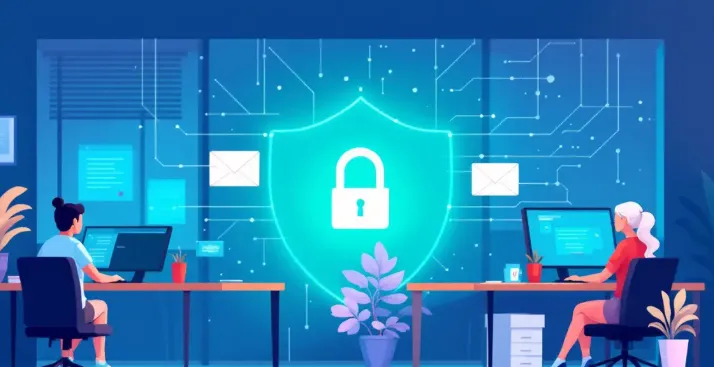
For a long time, cybersecurity was something many small and medium-sized businesses in Australia meant to “get around to later.” A basic antivirus, a router from the ISP and the occasional password change felt like enough. That mindset is disappearing fast. With more attacks targeting smaller organisations, regulatory expectations tightening and the cost of downtime climbing, Australian SMEs are quietly making a major shift: they are outsourcing protection to expert teams through managed cybersecurity services instead of trying to handle everything internally.
This move is not about fear or buzzwords. It is about survival, stability and the ability to focus on running the business instead of constantly worrying about the next phishing email or ransomware attempt.
The Reality of Cyber Risk for Australian SMEs
There is a dangerous myth that only large enterprises are worth targeting. In practice, smaller organisations are often easier to breach. They typically have fewer dedicated IT staff, less formal security training and a patchwork of tools that have grown organically over time. Attackers know this. Automated scans look for exposed services, weak passwords and unpatched systems with no regard for company size.
For an SME, the impact of a successful attack can be devastating. A few hours of downtime can halt operations. A ransomware incident can block access to client files and critical systems. A data breach can trigger regulatory scrutiny, reputational damage and costly notification requirements. Many owners underestimate how quickly the financial and operational fallout can escalate.
Against that backdrop, relying on a part-time internal resource or a generalist IT support provider with limited security focus is increasingly risky.
Why Traditional In-House Approaches Are Struggling
Some SMEs try to keep cybersecurity fully in-house. They might have a small IT team that manages servers, endpoints, cloud accounts and day-to-day support tickets. That team is already stretched. Asking them to also monitor threats around the clock, investigate suspicious activity, tune security tools and keep up with every new vulnerability is often unrealistic.
Security is no longer just a matter of installing software and walking away. It demands continuous monitoring, regular patching, log analysis, incident response playbooks and a good understanding of how attackers actually operate. Those skills take time and training to develop and are hard to recruit and retain at SME salary levels.
The result is a growing gap between the threats businesses face and the defences they actually have in place. That gap is exactly what attackers exploit.
What Managed Cybersecurity Services Actually Provide
Managed security is not just a fancy name for outsourcing IT. It is a structured way to plug into a team whose full-time job is to understand threats and defend against them. A typical managed security offering includes proactive monitoring of your environment, alerting when suspicious patterns appear, investigation of incidents, regular reporting and guidance on how to strengthen your posture over time.
Because these providers work across multiple clients, they see attack patterns earlier. If a new phishing campaign or exploitation technique appears in one environment, they can rapidly apply that knowledge to others. That shared intelligence is something a single in-house team usually cannot match.
Just as importantly, managed providers bring mature processes. Incident response is planned, not improvised. Backups and recovery steps are tested. Roles and responsibilities are clear. In a crisis, there is less confusion and more action.
Cost, Predictability and Access to Expertise
At first glance, outsourcing security might look more expensive than hiring internally. But when you factor in the full picture, many SMEs find the opposite is true. Building a proper internal security team would require multiple roles: someone for monitoring and detection, someone for governance and compliance, someone for engineering and tool management, perhaps even a dedicated incident responder. That is a significant payroll commitment, plus tooling and training.
Managed services, by contrast, give you access to a broad skill set under a predictable monthly fee. You are effectively sharing the cost of specialised tools, infrastructure and staff with other clients. For most SMEs, this model is simply more achievable than trying to replicate enterprise-grade security capabilities on their own.
There is also the cost you do not see on a balance sheet: peace of mind. Knowing that a team of professionals is watching your environment, updating defences and guiding improvements allows executives and staff to focus on serving customers and growing the business.
Compliance and Customer Trust
Australian customers and partners are asking tougher questions about security than they did a few years ago. Larger clients often require their suppliers to meet certain standards before signing a contract. Regulations and guidelines around data protection keep evolving. An ad hoc or informal approach to cybersecurity makes it hard to answer those questions confidently.
Managed providers help SMEs translate technical controls into clear, auditable practices. Policies are documented. Access is controlled. Logging, backups and encryption are handled systematically. When a potential client asks how you protect their data, you have substance to point to, not just good intentions.
This builds trust. In competitive markets, being able to demonstrate a credible security posture can be a differentiator, not just a defensive measure.
When It Is Time to Make the Shift
Not every SME is at the same stage, but there are common signals that it might be time to move toward a managed model. If your IT team spends most of its time putting out fires instead of planning, if you have had a series of near misses or minor incidents, if you cannot clearly explain your security posture to stakeholders or if you rely entirely on a couple of key individuals who would be hard to replace, then your risk is higher than it appears.
In these situations, partnering with a provider that lives and breathes security can transform how protected you really are. A trusted cybersecurity service built around your size, industry and risk profile gives you a framework for improvement rather than a patchwork of short-term fixes.
For many Australian SMEs, that is why the move to managed security is no longer a question of if, but when. The threat landscape will keep evolving. Attackers will keep innovating. The businesses that thrive will be the ones that accept security as an ongoing discipline and lean on expert partners to help them stay ahead.

I’m Leo Knox, the wordplay wizard behind WordsTwists.com where I turn everyday meanings into funny, clever, and creative twists. If you’re tired of saying things the boring way, I’ve got a better (and funnier) one for you!

