Heat pumps are essential for maintaining comfortable indoor temperatures year-round. They provide both heating and cooling by transferring heat between your home and the external environment. Like any mechanical system, heat pumps can experience performance problems that affect efficiency, comfort, and energy costs. When issues arise, timely diagnosis and repair are crucial to prevent further damage or breakdowns. We will explore how HVAC professionals approach heat pump problems, combining technical knowledge, systematic inspection, and targeted repair methods. Understanding their process can help homeowners anticipate potential issues, recognize warning signs, and ensure their system remains reliable and efficient for years to come.
The Step-by-Step Process HVAC Professionals Use to Address Heat Pump Issues
- Initial Inspection and Information Gathering
When a homeowner reports a problem, HVAC professionals from a reputable heat and air company begin with an initial inspection and collection of relevant information. This stage often starts with a conversation to understand the symptoms: is the heat pump failing to heat or cool effectively, making unusual noises, or cycling on and off frequently? Technicians also ask about the system’s maintenance history, age, and any recent performance issues. Professionals examine key components, including the indoor and outdoor units, refrigerant lines, electrical connections, filters, and ductwork. Observing visible wear, damage, or dirt accumulation helps narrow down potential causes. This combination of homeowner input and physical inspection sets the foundation for a precise diagnosis, ensuring technicians do not overlook minor details that may indicate larger issues.
- Assessing Electrical and Mechanical Components
After the initial inspection, the HVAC professional evaluates both electrical and mechanical components of the heat pump. Electrical assessments include checking breakers, fuses, wiring integrity, and control boards to ensure power is reaching the system properly. Mechanical evaluations focus on the compressor, fan motors, coils, and reversing valves. Technicians look for signs of wear, misalignment, or damage that can disrupt system performance. At this stage, measuring voltage, current, and continuity is common to identify electrical anomalies, while mechanical assessments involve observing movement and listening for unusual sounds such as rattling or humming. Identifying faulty electrical or mechanical components is crucial because even a single malfunctioning part can compromise overall system operation. This systematic assessment ensures technicians pinpoint the source of the problem rather than performing unnecessary replacements.
- Checking Refrigerant Levels and Pressure
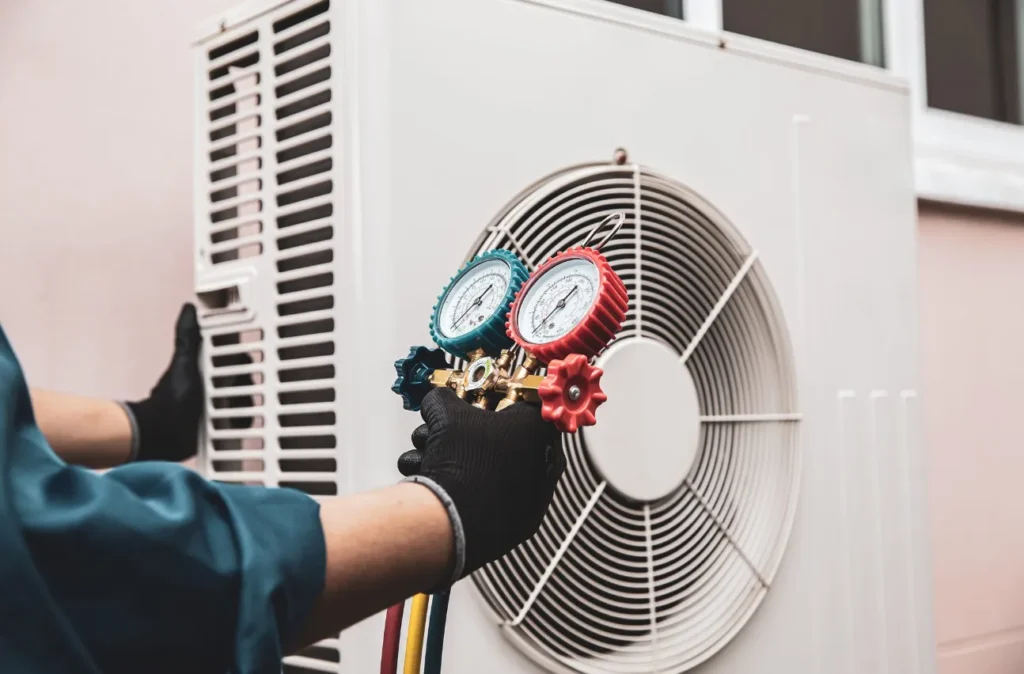
Proper refrigerant levels are critical for heat pump efficiency and functionality. HVAC professionals measure refrigerant pressure using specialized gauges to confirm it falls within the manufacturer’s recommended range. Low refrigerant levels often indicate leaks, which require careful inspection of coils, connections, and lines. High refrigerant levels can also create problems by overloading components and reducing efficiency. During this process, technicians also assess the condition of the refrigerant. Contaminated or degraded refrigerant can impair heat transfer, increase energy consumption, and place extra stress on mechanical components. By accurately assessing refrigerant pressure and quality, professionals can determine whether topping off, replacement, or leak repair is needed. Proper handling of refrigerants ensures compliance with safety regulations and protects both the environment and the system’s longevity.
- Testing System Operation and Performance
Once mechanical, electrical, and refrigerant systems have been inspected, HVAC professionals test the heat pump’s operation under controlled conditions. This involves running the system in both heating and cooling modes while monitoring temperature changes, airflow, and component responses. Professionals check for issues like inadequate heating or cooling, uneven airflow, short cycling, and abnormal noise or vibration. Performance testing can reveal hidden problems such as blocked ductwork, dirty coils, or failing sensors that may not have been evident during the initial inspection. Technicians may also use diagnostic tools to measure efficiency, airflow rates, and temperature differentials across the system. This stage provides concrete data on system performance, allowing professionals to develop a targeted repair strategy based on observed deficiencies rather than assumptions.
- Executing Repairs and Adjustments
After diagnosing the issue, the HVAC professional proceeds with necessary repairs or adjustments. This can include replacing faulty components such as compressors, fan motors, or reversing valves; repairing refrigerant leaks; and cleaning and straightening coils and ductwork. Electrical issues may require rewiring, replacing fuses, or resetting control boards. Technicians also ensure proper calibration of thermostats and sensors to maintain consistent performance. Each repair is performed in accordance with manufacturer guidelines and safety standards to prevent future malfunctions. In some cases, minor adjustments such as tightening connections, lubricating motors, or cleaning filters can restore efficiency without replacing major components. By addressing both the root cause and any related issues, HVAC professionals help homeowners achieve long-term reliability and improved energy efficiency.
- Post-Repair Testing and System Optimization
Once repairs are complete, HVAC professionals conduct post-repair testing to verify that the heat pump operates correctly in all modes. This includes measuring temperature output, checking refrigerant pressure, confirming proper airflow, and monitoring electrical performance. Any remaining inefficiencies are addressed immediately to ensure the system performs at optimal levels. Professionals may also provide guidance on regular maintenance, including filter replacement, coil cleaning, and periodic inspections, which help prevent future problems. Optimization can extend the heat pump’s lifespan and reduce energy costs while maintaining consistent indoor comfort. This follow-up ensures homeowners leave with confidence that the system has been fully restored to efficient operation.
- Providing Maintenance and Preventive Recommendations
Beyond immediate repairs, HVAC professionals often recommend preventive measures to prevent recurring issues. This can include scheduling seasonal tune-ups, cleaning or replacing filters, inspecting ductwork for leaks, and regularly monitoring refrigerant levels. Proper maintenance can prevent minor issues from escalating into costly repairs while preserving energy efficiency. Professionals may also educate homeowners on how to recognize early signs of heat pump issues, such as unusual noises, uneven heating or cooling, and rising energy bills. Pairing these proactive maintenance steps with a review of Graford electricity rates helps homeowners optimize energy usage and control utility costs while ensuring long-term system reliability and comfort.
Diagnosing and repairing heat pump issues is a detailed process that involves inspection, testing, and targeted intervention. HVAC professionals systematically evaluate electrical, mechanical, and refrigerant components while assessing overall system performance. Through careful observation, measurement, and repair, they restore efficiency, functionality, and comfort. Post-repair testing and preventive guidance help ensure the system continues to operate effectively and reduce the likelihood of future problems. Understanding the approach professionals take provides homeowners with insight into the complexity of heat pump maintenance, the importance of timely attention to system issues, and the benefits of consistent care. This knowledge encourages informed decision-making and helps maintain a reliable, energy-efficient home environment.

I’m Leo Knox, the wordplay wizard behind WordsTwists.com where I turn everyday meanings into funny, clever, and creative twists. If you’re tired of saying things the boring way, I’ve got a better (and funnier) one for you!